

qEEG – Quantitative Electroencephalography
qEEG, or quantitative electroencephalography, is an advanced form of electroencephalography (EEG) that records and analyses the brain’s electrical activity using mathematical and statistical methods.
qEEG võimaldab võrrelda saadud ajulaineid tavaliste normidega ning tuvastada võimalikke kõrvalekaldeid, mis võivad olla seotud erinevate neuroloogiliste või psühhiaatriliste seisunditega. Aju lained on rütmilised elektrilised impulsid, mis tekivad siis, kui miljonid neuronid ajus omavahel suhtlevad. Ajulained annavad olulist teavet aju üldise toimimise kohta. qEEG uuring aitab tuvastada ajulainete mustreid, mis võivad olla seotud tähelepanu puudulikkuse, ärevuse ja teiste sümptomitega. qEEG uuringu tulemused annavad väärtuslikku teavet aju talitluse kohta, mille põhjal on võimalik koostada tõenduspõhine ja vajaduspõhine raviplaan.
qEEG-d kasutatakse mitmesugustes valdkondades, sealhulgas:
- Neurology: To assess epilepsy, traumatic brain injury, and other neurological conditions.
- Psychiatry: In the assessment of depression, anxiety disorders, ADHD, and other mental health conditions, as well as in monitoring treatment outcomes.
- Clinical psychology and neurofeedback therapy: Helps tailor brain training programmes and assess cognitive functioning.
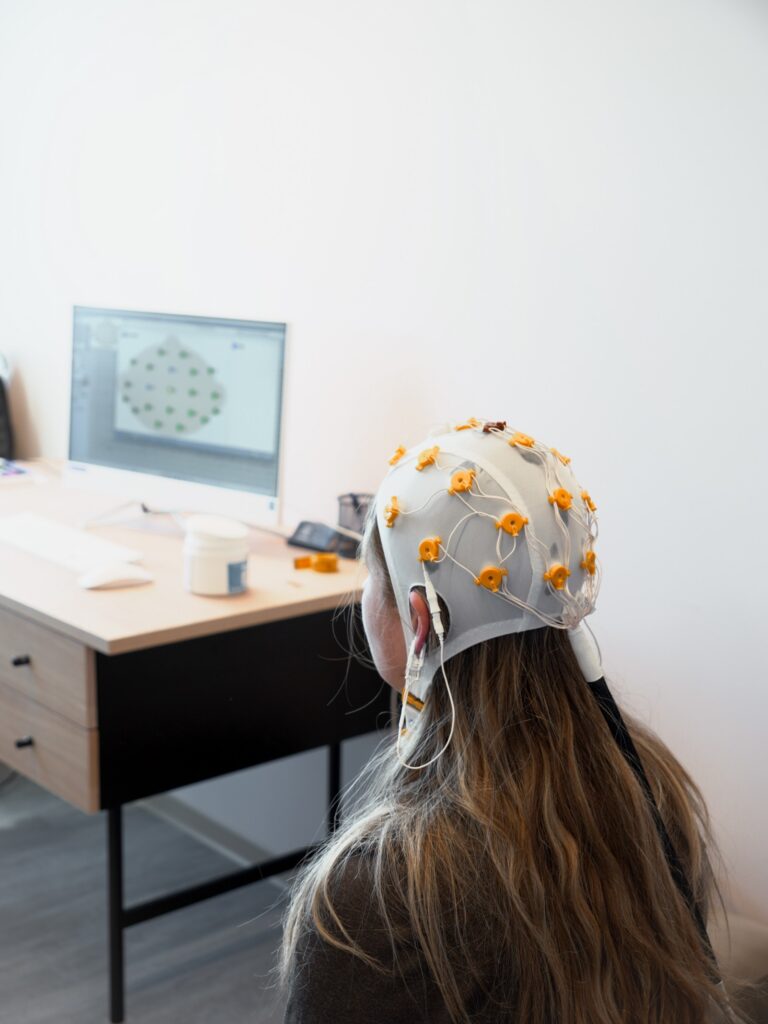
People experiencing mental health symptoms may benefit from a qEEG assessment, as it can provide a more detailed understanding of patterns of brain activity.
qEEG may be helpful in the following conditions:
The main benefits of qEEG include:
-
helps identify cognitive and psychiatric difficulties;
-
helps identify opportunities to regulate brainwave patterns;
-
may help predict treatment response, for example, by assessing how a person may respond to antidepressants;
-
provides valuable information for developing an individualised treatment plan, including biofeedback techniques such as neurofeedback, to support balanced brain activity;
-
allows the effectiveness of different therapies and treatment methods to be monitored;
-
provides objective data that can be used to design a personalised neurofeedback programme or plan other therapies, such as transcranial magnetic stimulation (TMS).
Kuidas protseduur toimib?
qEEG on ohutu, mitteinvasiivne ja valutu uuringumeetod.
Uuringu käigus asetatakse peanahale elektroodidega müts, mis mõõdab ajus tekkivaid elektrilisi signaale.
Parema elektroodide kontakti saamiseks kasutatakse spetsiaalset geeli. Elektroodid ei mõjuta kuidagi ajutegevust, vaid annavad teavet selle kohta, millistes aju piirkondades on ajulainete aktiivsus tasakaalus, liiga madal või liiga kõrge.
Salvestamise ajal istub patsient mugavalt toolil ning andmeid kogutakse 10 minutit kinniste silmadega ja 10 minutit lahtiste silmadega.
Kogu protsess on valutu ning vastuvõtt ei kesta kauem kui 60 minutit.
Peale vastuvõttu spetsialist töötleb andmeid
tulemusi saab esitada graafikutena, mis näitavad aju aktiivsuse mustreid ja võrdlevad neid tavaliste normidega.
A doctor’s consultation is added to the service.
QEEG meelespea
Enne qEEG protseduuri on oluline järgida mõningaid juhiseid, et tagada võimalikult täpsed tulemused:
Puhkus ja uni:
Veendu, et oled eelneval ööl piisavalt maganud, kuna väsimus võib mõjutada aju elektrilist aktiivsust.
Puhas peanahk:
Vältida juuksegeele, spreisid või muid juuksetooteid, kuna need võivad häirida elektroodide kontakti peanahaga.
Kofeiini ja stimulantide vältimine:
Väldi kohvi, energiajookide ja muude stimulantide tarbimist vähemalt 2-3 tundi enne protseduuri.
Ravimite tarvitamine:
Kui võtad regulaarselt ravimeid, teavita sellest eelnevalt psühhiaatrit, kuna teatud ravimid võivad mõjutada EEG tulemusi. Seejärel saab arst anda täpsed juhised ravimite tarvitamise kohta.
Lõõgastumine:
Protseduuri ajal on soovitatav olla võimalikult lõõgastunud ja liikuda minimaalselt, et vältida häireid mõõtmistulemustes.
(Metallist) ehted:
Enne protseduuri tuleb eemaldada kõik metallist ehted ja aksessuaarid, et need ei mõjutaks mõõtmistulemusi.
Alusta oma aju analüüsi teekonda
qEEG uuring aitab tuvastada ajulainete mustreid, mis võivad olla seotud tähelepanu puudulikkuse, ärevuse ja teiste sümptomitega.
